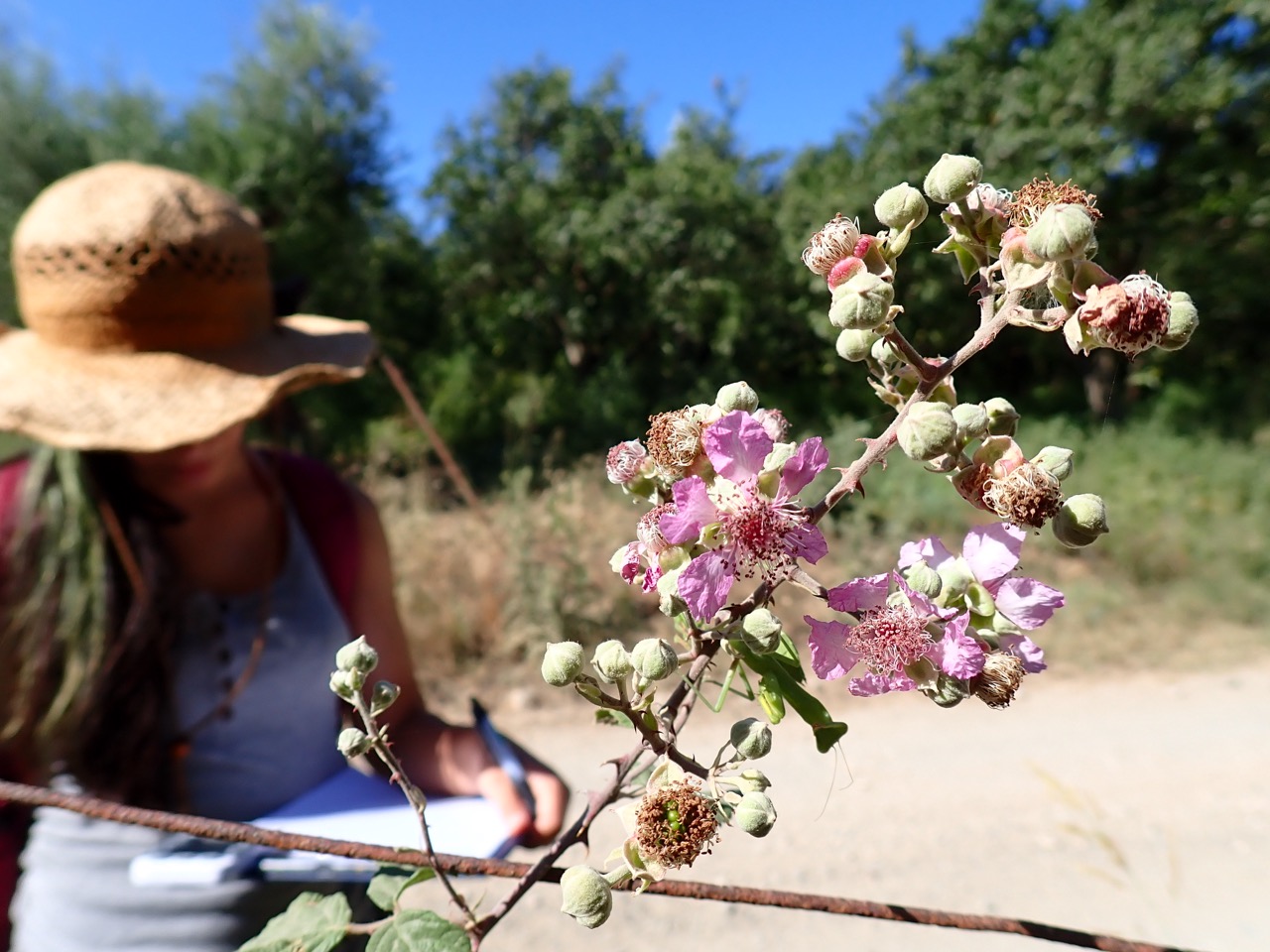
QUYFIN develops monitoring systems that follow changes in plant populations, insect populations, pollinator behaviour, soil structure and ecological interactions over time. This demo post introduces the observatory perspective and can be replaced with a full editorial article.
Seeing Biodiversity as a Living System
Biodiversity is often described through numbers: how many species are present, which species are declining, or how much habitat has been lost. These indicators are important, but they only capture part of a much larger and constantly changing picture.
An ecosystem is not a static collection of plants, insects, microorganisms and animals. It is a network of relationships that develops over time. Plants emerge, compete and disappear. Pollinators respond to flowering periods and weather conditions. Soil communities change according to moisture, temperature, cultivation practices and organic matter. Insects move across landscapes, while agricultural activities alter the resources available to them.
Understanding these processes requires more than occasional observation.
It requires continuous, structured and locally grounded monitoring.
This is the principle behind the QUYFIN observatory approach: creating monitoring systems capable of making ecological change visible at the scale where it actually happens.
Rather than treating biodiversity as something that is measured once, QUYFIN approaches it as something that must be observed through time.
Why Local Monitoring Matters
Large-scale biodiversity datasets are essential for understanding regional, national and global trends. However, many ecological changes begin at a much smaller scale.
A field changes its management practices.
A flowering plant becomes less common.
A pollinator species appears earlier in the season.
A previously abundant insect becomes difficult to find.
Soil structure changes after several years of cultivation.
A period of drought alters the relationship between vegetation and insect populations.
These changes may initially be invisible in national or continental datasets. At the local level, however, they can represent important signals.
Local monitoring systems provide the resolution needed to detect those signals.
By repeatedly observing specific locations, researchers can begin to distinguish between short-term variation and longer-term ecological change.
This distinction is critical.
A decline observed during a single season may be caused by unusual weather. The same decline repeated over several years may indicate something more structural. Similarly, an increase in pollinator activity during one flowering period may be temporary, while a consistent shift in timing could suggest a broader ecological response.
Monitoring turns isolated observations into time series.
And time series allow us to ask a much more powerful question:
What is changing?
From Snapshot to Observatory
Traditional ecological surveys often provide a snapshot of a particular place at a particular moment.
A monitoring observatory aims to create something different.
Instead of asking only what exists at a location today, an observatory asks how that location evolves.
This requires consistency.
Measurements need to be repeated using comparable methodologies. Sampling locations need to be documented. Environmental conditions need to be recorded. Observations must be stored in ways that allow future comparison.
Over time, this creates an ecological memory of a landscape.
A farm, for example, may initially be monitored for plant and pollinator diversity. Several years later, the accumulated data may reveal relationships that were impossible to identify during the first survey.
Changes in flowering periods might correspond with changes in pollinator abundance.
Different management practices might influence insect communities.
Soil characteristics may help explain why certain plant populations expand while others decline.
What begins as individual observations gradually becomes a system capable of revealing patterns.
Monitoring Plant Populations
Plants provide one of the most visible indicators of ecological change.
Vegetation responds to soil conditions, rainfall, temperature, land management, competition and disturbance. Changes in plant communities can therefore provide valuable information about the wider condition of an ecosystem.
Local monitoring can examine questions such as:
- Which plant species are present?
- How abundant are they?
- When do they emerge and flower?
- How long do flowering periods last?
- Which species are expanding or declining?
- How do plant communities respond to agricultural practices?
- How does vegetation differ between cultivated and uncultivated areas?
Repeated surveys allow researchers to move beyond simple species lists.
A plant that appears occasionally may become established. A dominant species may gradually lose ground. Flowering periods may shift. New species may enter the system.
Each observation contributes another piece to the ecological history of the site.
Following Insect Populations
Insects are among the most diverse and ecologically important organisms on Earth, yet their populations can be difficult to understand.
They can respond rapidly to changes in temperature, rainfall, vegetation, pesticide use, habitat structure and food availability. Their abundance can also vary significantly from season to season.
This makes long-term monitoring particularly valuable.
Instead of attempting to interpret insect populations from isolated surveys, monitoring systems can record patterns across multiple seasons and years.
Researchers can examine changes in abundance, diversity, distribution and seasonal activity.
The objective is not simply to count insects.
It is to understand how insect communities interact with the landscapes around them.
That may involve observing relationships between insects and vegetation, comparing different land-management practices or investigating how environmental conditions influence population dynamics.
Local monitoring provides the detailed context necessary to interpret these changes.
Understanding Pollinator Behaviour
Pollination is one of the clearest examples of an ecological interaction that depends on timing.
A flowering plant and its pollinator must be active at compatible moments.
If flowering periods shift but pollinator activity does not, the relationship between them may change.
For this reason, monitoring pollinators involves more than recording whether bees, butterflies or other insects are present.
It can include observing:
- visitation frequency,
- species diversity,
- flowering resources,
- seasonal activity,
- movement between habitats,
- responses to weather conditions,
- and interactions between specific plants and pollinators.
When these observations are repeated, researchers can begin to build networks of ecological relationships.
Instead of seeing a bee as an isolated observation, we see the bee visiting a particular plant, during a particular flowering period, under particular environmental conditions.
This relational perspective is essential for understanding biodiversity.
Looking Beneath the Surface
Many of the most important ecological processes are invisible from above ground.
Soil is not simply a physical substrate supporting plants. It is a complex environment containing minerals, organic matter, water, air, microorganisms and countless biological interactions.
Changes in soil structure can influence water retention, nutrient availability, root development and microbial activity.
At the same time, land-management practices can gradually alter soil characteristics.
Monitoring soil therefore adds another dimension to biodiversity observation.
Depending on the research context, measurements may examine physical properties, organic matter, moisture, biological activity or microbial communities.
These observations can then be considered alongside data from plants and insects.
This is important because ecosystems do not operate in separate layers.
Above-ground biodiversity and below-ground biodiversity are connected.
Plant communities influence soil organisms. Soil conditions influence vegetation. Vegetation affects insects. Pollinators respond to flowering resources.
The monitoring system becomes more powerful when these relationships can be studied together.
Connecting Field Observation With Laboratory Analysis
Some ecological signals can be observed directly in the field.
Others require laboratory methods.
Modern biodiversity research increasingly combines traditional ecological monitoring with molecular techniques capable of detecting organisms that may otherwise be difficult to identify.
Environmental DNA, or eDNA, and metabarcoding approaches can provide additional information about biological communities from environmental samples.
These techniques do not replace field observation.
Instead, they can complement it.
A field survey may document visible plant or insect communities, while laboratory analysis can reveal additional biological information from soil, water or other environmental material.
Combining these perspectives creates a richer understanding of the monitored ecosystem.
The field provides ecological context.
The laboratory provides another layer of biological resolution.
Together they help transform individual measurements into a multidimensional picture of biodiversity.
Mapping Ecological Change
Biodiversity also has a spatial dimension.
Where something happens can be just as important as what happens.
Geographic Information Systems (GIS) and spatial analysis allow ecological observations to be connected with their location within the landscape.
Monitoring sites can be mapped alongside agricultural fields, vegetation zones, water systems, infrastructure and other environmental characteristics.
Over time, maps can begin to show patterns.
Where are particular species declining?
Where is pollinator activity concentrated?
Which parts of a landscape provide important ecological resources?
How do populations move between different habitats?
Where do management practices appear to produce different ecological outcomes?
Spatial information helps transform biodiversity data into something that can be explored visually.
It also makes ecological change easier to communicate.
From Data to Ecological Indicators
Collecting data is only the beginning.
The real objective of a monitoring system is to transform repeated observations into meaningful indicators.
An indicator simplifies complex ecological information without removing its context.
Depending on the monitoring programme, indicators might describe changes in species richness, population abundance, pollinator visitation, flowering periods, soil characteristics or ecological connectivity.
The most useful indicators are not necessarily the most complicated.
They are the ones that can be measured consistently and interpreted clearly.
A monitoring programme therefore needs to balance scientific detail with long-term practicality.
Measurements must be rigorous enough to provide meaningful information but realistic enough to be repeated.
This is especially important when monitoring extends across farms, municipalities or larger networks of sites.
Working With Farmers and Land Users
Ecological monitoring does not happen in isolation from the people who manage landscapes.
Farmers, beekeepers and other land users interact with ecosystems every day. They observe flowering patterns, insect activity, soil conditions and seasonal changes through direct experience.
Scientific monitoring can complement this knowledge.
Rather than treating agricultural landscapes only as research locations, an observatory can create opportunities for collaboration between researchers and the people who work within those landscapes.
Farmers may provide valuable historical context.
Beekeepers may notice changes in flowering resources or pollinator activity.
Land managers may understand local conditions that are difficult to capture through remote datasets.
When structured scientific monitoring is combined with local knowledge, ecological observations gain context.
This collaboration also helps ensure that biodiversity information becomes useful beyond academic research.
Building Comparable Monitoring Networks
One monitoring location can tell us a great deal about a particular ecosystem.
A network of monitoring locations can tell us something more.
When similar methodologies are applied across multiple farms or landscapes, comparisons become possible.
Different agricultural practices can be examined.
Different soil types can be compared.
Variations in vegetation and pollinator activity can be explored.
Regional patterns may begin to emerge.
The objective is not necessarily to make every site identical.
Ecological systems are inherently local.
Instead, the challenge is to create enough methodological consistency that local differences can be meaningfully compared.
This is one of the central opportunities of observatory-based biodiversity monitoring.
Each location contributes its own ecological story while simultaneously becoming part of a larger dataset.
Making Biodiversity Visible
One of the challenges facing biodiversity research is communication.
Ecological systems are complex, and the changes occurring within them are not always immediately visible.
A farmer may notice fewer insects but have no historical dataset for comparison.
A municipality may want to understand the ecological condition of an area but lack local indicators.
A research consortium may need consistent observations across several locations.
An agrifood company may want to understand biodiversity dynamics within its production landscapes.
Monitoring systems can help bridge this gap.
Through dashboards, maps, indicators, reports and visualisations, complex ecological observations can become accessible without losing their scientific foundation.
The objective is not simply to produce more data.
It is to make ecological processes understandable.
When biodiversity becomes visible, it becomes easier to discuss, investigate and manage.
Monitoring Before Intervention
There is also an important principle behind observation itself.
Before deciding how an ecosystem should be managed, it is valuable to understand how that ecosystem currently functions.
Monitoring creates a baseline.
It documents existing conditions before interventions are introduced.
If a farm changes its management practices, monitoring can help examine what happens afterwards.
If habitat improvements are introduced, their ecological effects can be followed.
If environmental pressures increase, historical observations provide a reference point.
Without a baseline, it can be difficult to determine whether a later change represents improvement, decline or normal variability.
For this reason, monitoring is not simply a method of documenting biodiversity.
It is part of the infrastructure needed for evidence-based environmental decision-making.
Long-Term Observation in a Rapidly Changing Environment
Climate change, land-use transformation, agricultural intensification and other environmental pressures are altering ecosystems around the world.
Many of these changes occur gradually.
Others happen suddenly.
In both cases, long-term observation is essential.
The value of an observatory grows with time.
The first year establishes a reference.
The second year introduces comparison.
After several years, patterns begin to emerge.
Over longer periods, the dataset becomes a record of ecological transformation.
This long-term perspective is particularly important because ecological systems naturally fluctuate.
Only repeated observation allows researchers to separate temporary variation from persistent change.
A Research Infrastructure Built Around Observation
QUYFIN approaches biodiversity monitoring as research infrastructure.
The objective is to connect field observations, laboratory analysis, spatial information and ecological data within systems that can operate over time.
This infrastructure can support different types of research and collaboration: from individual farms and local landscapes to municipalities, agrifood organisations and European research projects.
The specific methods may vary depending on the ecosystem and research question.
The underlying principle remains consistent:
observe, measure, compare and understand.
By creating repeatable monitoring systems, biodiversity becomes something that can be followed rather than simply described.
Relationships become measurable.
Changes become visible.
Local observations become comparable.
And ecological information becomes increasingly useful for research, land management and environmental decision-making.
From Observation to Understanding
Biodiversity is constantly changing.
The challenge is not simply to document what exists today, but to understand the direction and meaning of that change.
Local monitoring systems provide a way to build that understanding from the ground up.
A plant observation becomes part of a population trend.
An insect record becomes part of a seasonal pattern.
A pollinator visit becomes part of an interaction network.
A soil sample becomes part of a longer ecological history.
A single monitoring site becomes part of a wider observatory.
Over time, these individual observations begin to connect.
That is when biodiversity data becomes more than a collection of measurements.
It becomes a way of seeing how ecosystems change.
And by making those changes visible, we create the foundation for better questions, better research and better-informed decisions about the landscapes we share.