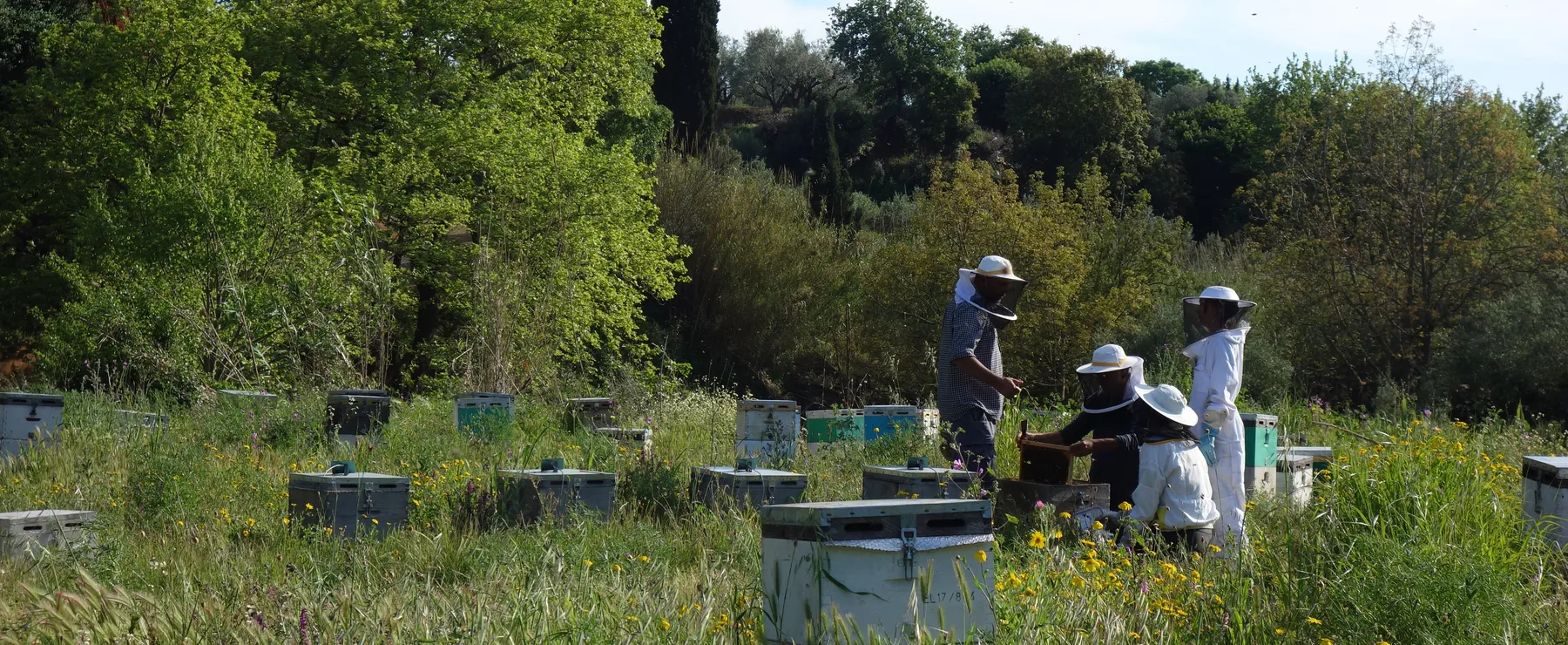
People working outdoors in a field monitoring context.

Collaborate

Biodiversity monitoring designed with the people and institutions closest to ecological change.

01 Research institutions / consortia

For institutions and research partners

Monitoring pilots, joint research and long-term ecological evidence.

QUYFIN collaborates with research institutions and scientific consortia to design and implement biodiversity monitoring in areas undergoing ecological change. Collaborations can include monitoring pilot sites, joint research, methodological validation, long-term data collection and the development of ecological indicators adapted to specific contexts.

By combining field observations, ecological analyses and long-term monitoring, these collaborations can generate evidence on biodiversity responses and ecological adaptation, supporting research, restoration and environmental decision-making.

Research institutions interested in monitoring pilots, joint research or data partnerships are invited to contact us to explore a collaboration.

Monitoring pilot sites Method validation Ecological indicators Data partnerships
02 Farmers / beekeepers / land managers

For land users and local initiatives

Monitoring designed with people who know the landscape first-hand.

Land users have first-hand knowledge of the places they manage and are essential partners in understanding ecological change. QUYFIN works with farmers, beekeepers and other land managers to monitor plants, pollinating insects, soil life and other ecological indicators, helping reveal how biodiversity responds to land-use practices over time.

Monitoring is designed together with participating land users and carried out with their prior agreement. We are transparent about what is collected, how the data are used and how results are shared.

Land users and local initiatives interested in biodiversity monitoring, ecological restoration or understanding changes on their land are invited to contact us.

Field knowledge Plants and pollinators Soil life Results shared back

Collaboration Process

Understand → Define → Design → Observe → Interpret → Share

A collaboration moves from a shared question to a monitoring design, then to observation, interpretation and a form of knowledge that can be used by the people involved.

01

Understand

We start with a discussion or field visit to understand the context, the questions being raised, and what the collaboration should address.

02

Define

Together, we define the objectives, scope, responsibilities, methods and practical conditions of the collaboration.

03

Design

We develop a monitoring or research approach adapted to the site, the questions being asked and the available resources.

04

Observe

We carry out field monitoring, sampling and laboratory analyses to document biodiversity and ecological change.

05

Interpret

We analyse the data and translate the results into ecological indicators, patterns and evidence relevant to the original questions.

06

Share

Results are returned in an appropriate form - reports, datasets, presentations, scientific publications or practical recommendations - and discussed with the people involved.

Start a conversation